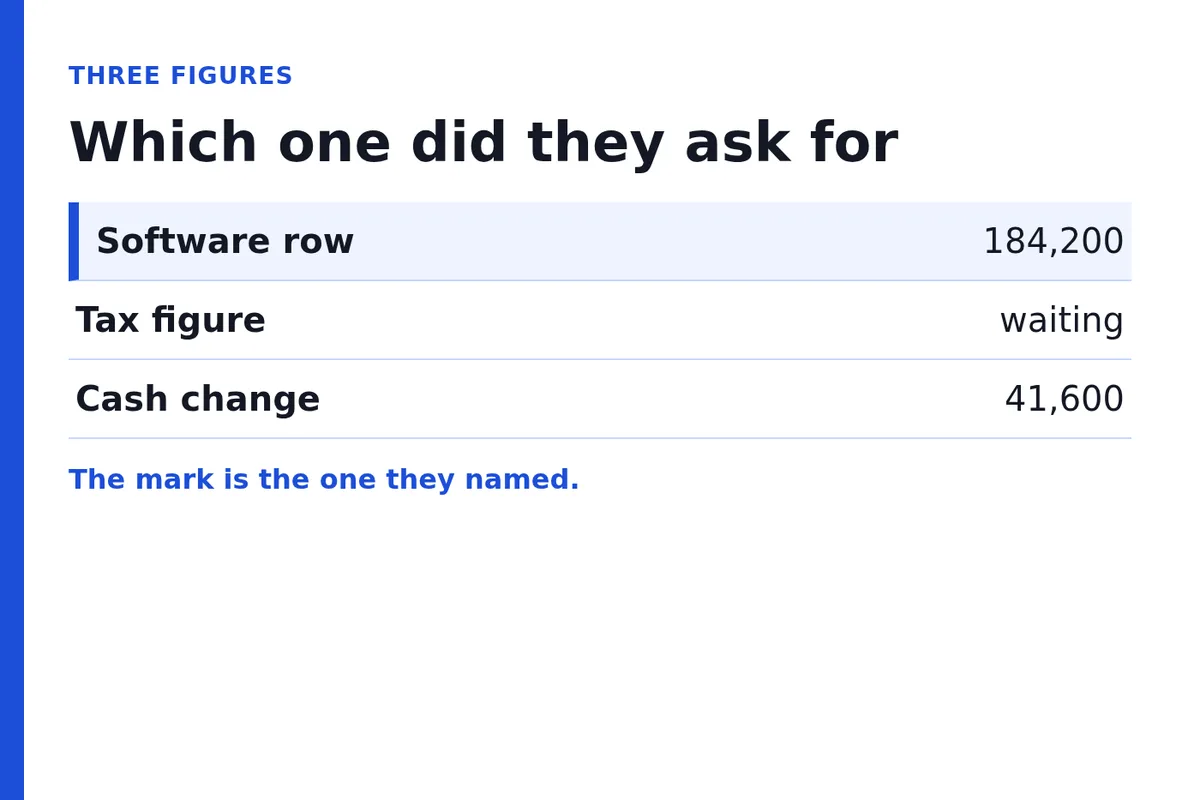
Calculating Net ProfitName the figure they asked for.
A lender, a partner, or a form already asked for a figure. Steven Palmieri, Tax CFO and the Entrepreneur's CFO, will not close the books, set up payroll, or prepare the return until that figure has a name.
Name the figureName the figure.

You will be talking to the Steven Palmieri practice.
The Tax CFO way when someone asks for a figure.
A printed row counts a month that already happened. Steven Palmieri, the Tax CFO, names which of the three figures that row may stand for, and decides what the next close should change before anyone sends the number. The name of the figure comes first.
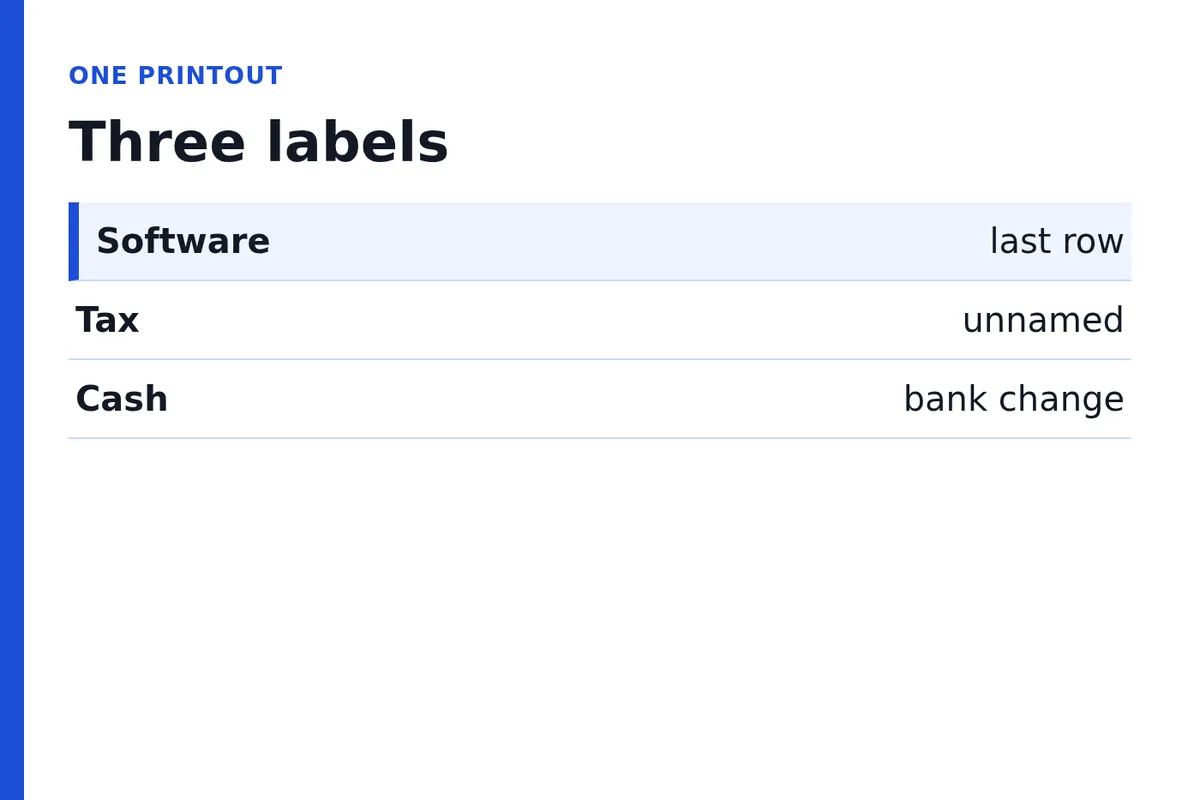
Three names, one printout.
The software row, the tax figure, and the cash change answer three different questions.
Click to read the three labels ›Tap to read the three labels ›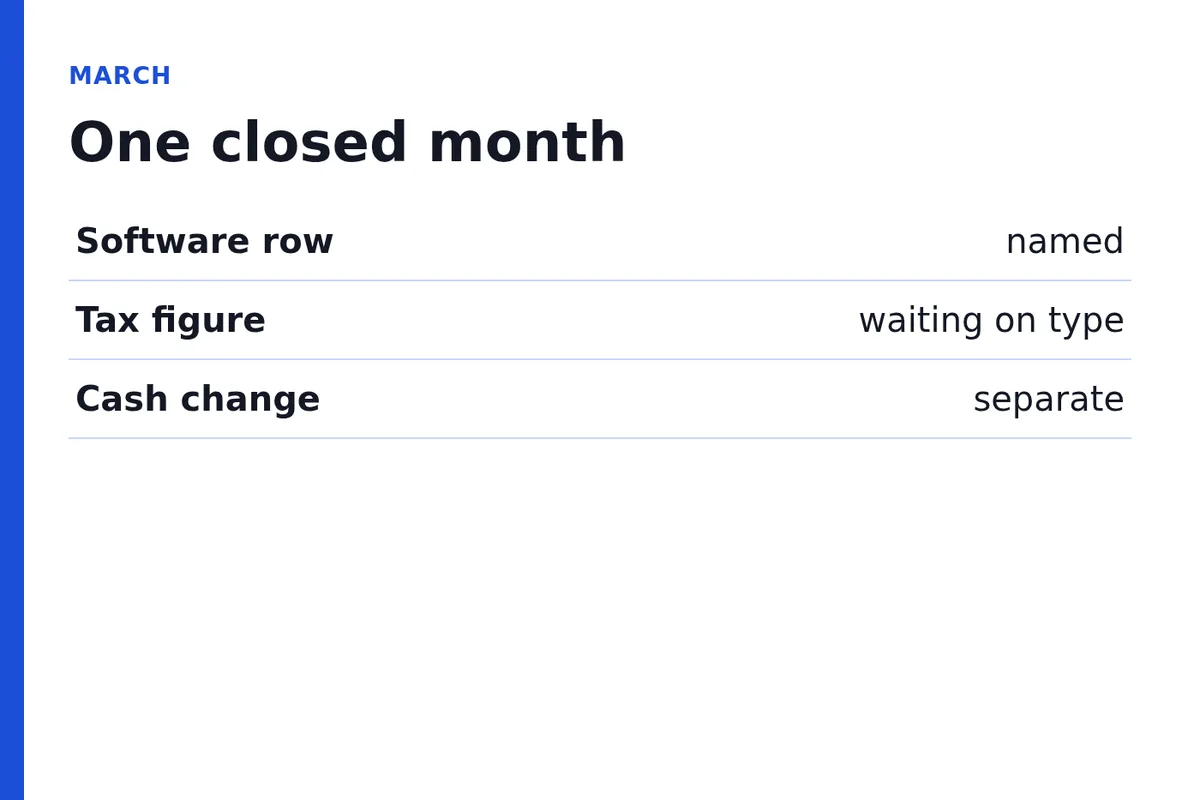
One month already closed.
A single closed month shows the bends before anyone discusses a year.
Click to see one closed month ›Tap to see one closed month ›Tax waits on the type.
The return cannot name a tax figure until the company type is known.
Click to see why tax waits ›Tap to see why tax waits ›Questions we hear first.
Owners ask which line to send. We answer that before we touch a later month.
Click to read the questions ›Tap to read the questions ›Who keeps the books.
Steven Palmieri is the Tax CFO on the close, the payroll setup, and the return.
Click to see who answers ›Tap to see who answers ›A time to name it.
Bring the sentence they asked for. The call names the figure before it ends.
Click to pick a time ›Tap to pick a time ›Steven Palmieri.
Tax CFO and the Entrepreneur's CFO. The month gets closed, payroll gets set up, the statements get written, and the return follows the closed months.
Ask us which figure the other person meant. That question is the start of the work, and the close follows it.
Six moments before the number leaves.
Open one stop. Each stop is a bend we clear before a figure is allowed to travel.
1Software line
We copy the last row exactly, including the label the software printed, before anyone forwards the page.
The close stops there until that label is written down in our own words.
2Owner draw
A draw coded as a cost comes back out of expenses and into equity, because the owner took money, the company did not spend it.
We make that move in the books and we say so when the row changes.
3Loan split
Interest can remain with the costs. Principal reduces the loan. The cash still leaves the bank either way.
We split the payment before anyone treats the whole draft as a cost of the work.
4Cash change
The bank can fall while the software row rises, when a draw, a payoff, or a new loan moved cash.
We keep the cash change on its own line and we never rename it profit.
5Company type
Sole owner, partnership, S corporation, or C corporation decides which tax figure the return is allowed to use.
We wait for that type. A tax figure with no company type under it does not leave.
6Their sentence
The lender, the partner, or the form receives one sentence that names a single figure and says which of the other two it leaves out.
We write that sentence with you. A page with no sentence stays in the file.
The printout is one label.
Show the next lines
Someone asked for a profit figure. The software answered with the last row on its own report. Those two events feel like the same event, and they are not. The row is whatever the software was told to roll up. The question was whatever the other person meant.
We start by writing both down in separate sentences. One sentence quotes their ask. The other sentence quotes the label on the row. If the words differ, the number is not ready to travel, even when the arithmetic inside the file is tidy.
A lender often wants a figure that can support a payment. A partner often wants a figure that can be split. A tax form wants a figure the company type allows. The software does not know which of those three just spoke. We do.
Nothing on this site is a box that subtracts two rows and hands you a winner. The bends live in how a row was coded. A blank calculator cannot see a draw, a loan, or a deposit that was the owner putting money back in.
A draw is equity.
Show the next lines
Owners pay themselves. The software sometimes files that payment with the costs of the work. The payment is real, and the category is wrong. Money the owner took is equity. It is not the cost of a job, a supplier, or the shop.
When we find that coding, we move the row. Expenses fall. Equity shows the draw. The software's last row changes, and the change is the point. Leaving the draw inside expenses makes the work look poorer than it was and makes the owner look like a vendor.
We say this out loud before the figure leaves. If you have been taking a set amount each month, tell us. We would rather reclass a year of draws once than explain them one by one after a stranger has already read the wrong row.
The same test covers a personal bill that rode through the company card. If the purpose was the household, the row does not stay in the costs of the work. A household charge comes off. Disguising it as a job cost is the mistake.
A loan payment splits.
Show the next lines
A loan draft leaves the bank in one amount. The books are not allowed to treat that whole amount as a cost. Interest can be a cost. Principal pays down what the company owes. The cash is gone either way, and the profit figure only absorbs the interest.
Owners feel the draft, so the draft becomes the story. We pull the statement and split the draft before anyone copies the software row into an email. A year of unsplit drafts can make a healthy shop look like it lost money it did not lose.
A new loan does the opposite. Cash arrives. That arrival is not sales. If the deposit was the lender, we label it as the lender. The software row should not rise because the bank account rose for a reason that was financing.
We reconcile the bank, the cards, and the loan balances to the same month. A loan balance that still shows last year's number is a sign the split never happened. The close does not finish while that balance is stale.
Cash is its own label.
Show the next lines
Cash left in the bank is a fact about the account. Profit is a different label. Tax is a third label. None of those labels is the balance on the screen. A shop can show a strong software row and a thin bank, or a thin software row and a fat bank, for reasons that have nothing to do with the week of work.
Draws, loan principal, buying a piece of equipment, and paying last year's tax all move cash without being this month's cost of the work. We list those moves beside the software row so nobody has to guess why the bank and the report disagree.
When a stranger says the company is down because the bank is down, we ask which month closed and which draft caused the drop. Often the work was fine and the cash moved for a reason the report already knew, once the rows were labeled. Only then do we talk about how the week of jobs actually went.
You get a closed month and a figure that still has its name. Leaving the label off means the number is unfinished. A nameless number is how the wrong row gets forwarded.
The bank can disagree.
Show the next lines
A decline on the bank screen is easy to feel and easy to misname. We do not let that feeling rename the software row. First we match the account to the books. Then we name the drafts that were draws, principal, tax, or equipment. The talk that follows is only about how the week of jobs actually went.
Cards work the same way. A card balance is not a cost until the charges are coded and the month is closed. Paying the card moves cash. The costs were the charges, and they belong to the months they happened, not to the afternoon the payment cleared.
If the feed has been quiet, we say when a month last agreed with the statement. The next month we touch is the one after that. We do not stack a fresh month on a month that never tied.
This is ordinary close work. It is also the only honest way to answer the person who asked for a profit figure. The answer names a label. It does not borrow the bank's mood.
What leaves this practice.
Show the next lines
Books stay here through the close. Payroll work stops once the setup is done, and payday keeps going out from the provider already on the account. Statements an owner can read come out of the closed months, and the return is built from those same months.
The federal dates we will say out loud are few. Individuals file toward mid April. Partnerships and S corporations file toward mid March. Estimated payments land on four dates spread through the year. Contractor forms for the year just ended leave as January closes. A shop can change states and those dates stay put.
Opinion letters on a set of statements come from firms built to issue them. This practice is not one of those firms. What can leave here is the closed month, sitting under their letter as the record.
If the figure has no name, it stays in the file. That rule is the whole offer. Bring the sentence they used. We will match it to one label, or we will tell you the label is not ready.
Send the sentence.
Write the ask in their words. We answer with one label.
You will be talking to the Steven Palmieri practice.